T-Scann 8 - project page
Super 8 / Regular 8 film scanner
Save files test 2026.
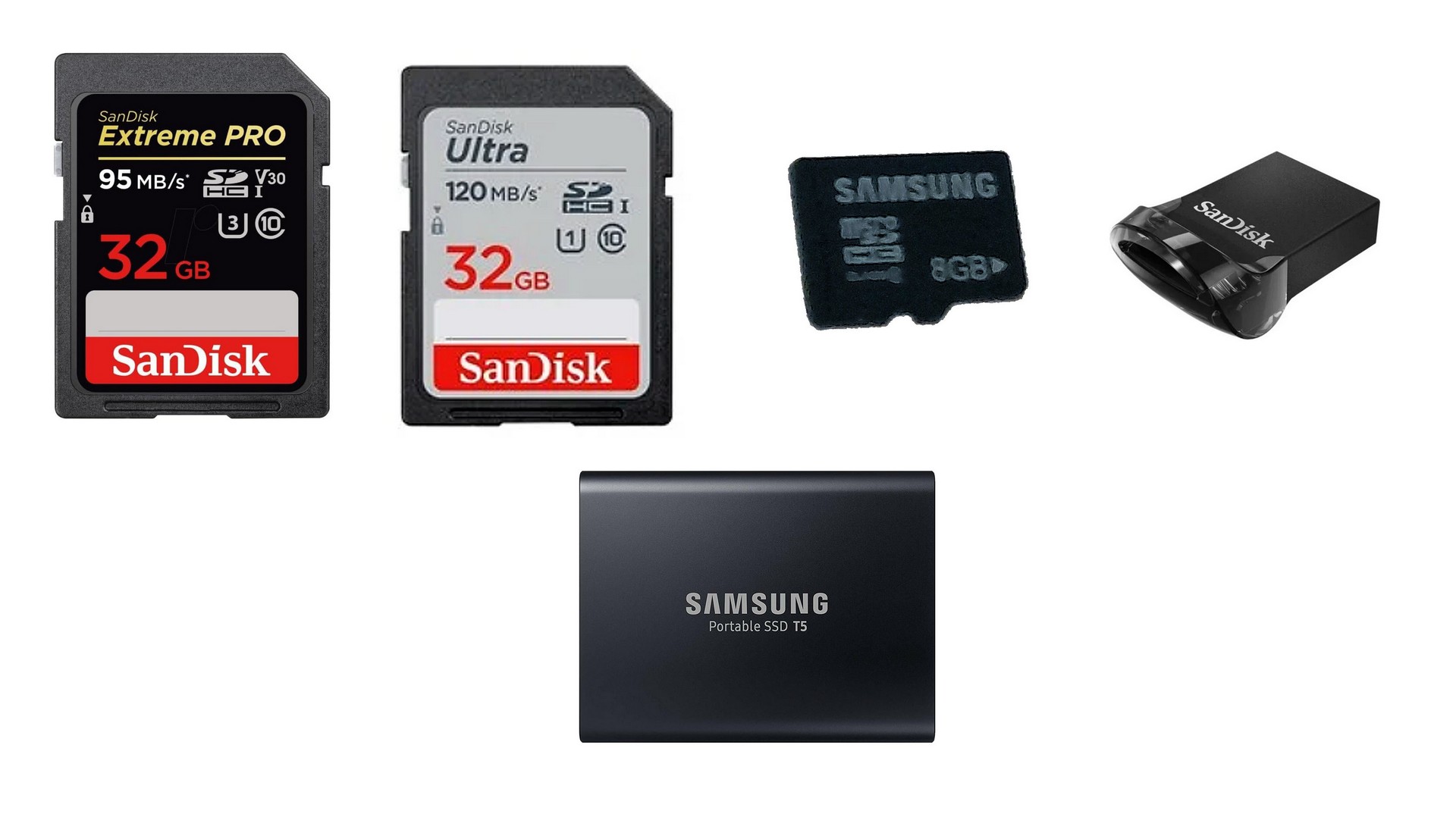
Frames files from T-Scan 8 can be saved on different media
Hard disk / USB memory / Memory card.
- The easiest is to save on USB memory but not the fastest. Labeling of USB how fast they are is not so good.
- Hard disk preferably SSD is the fastest but difficult with power from Raspberry PI requires 1A, either disk with separate power supply or USB hub with extra power supply. I use USB hub myself.
- Memory card requires card reader (USB3) Memory cards have clear labeling and easy to find different tests.
What you should look for is performance writing small files 4KB Ran. Read (QD1) and Sequential Write. Both of these values should be as high as possible. https://www.tomshardware.com/ is a good site for those who buy a new SSD. Keep in mind that the disk does not have to be particularly large, if you have a 100GB SSD or even smaller use it! A roll of 15 meters Super 8 takes about 11 GB.
Have tested these with the following assumptions: Raspberry Pi 4,USB3 port(blue) Fat32 black film / original resolution 2028 x 1520 PNG. Number of images in 1 min.
The fastest format on the disk is ext4 (Linux) but neither Windows nor Mac OS supports this format without additional software. However, it is possible to have 2 partitions on a disk SMALFILM ext4 and archive Fat 32. Then you can copy over from SMALFILM to Archive which is then readable on Windows and Mac OS. If you use a PC with Linux then ext4 is of course no problem. DaVinci Resolve is available for Linux.
SSD Samsung T5 USB3
*Dustin USB 3 / SSD Intel
SSD Intel USB2
Sandisk Extreme pro
Sandisk Ultra
Sandisk UltraFit USB memory
Samsung Micro SD class 2
45 / ext4 49
44
42
30
29
27
23
* Cheap hard drive enclosure to put your SSD drive in
https://www.proshop.se/Haarddisk-tillbehoer/Deltaco-Externt-haardiskkabinett-USB-30-skutbar/2791000
If we are to scan a super 8 film 15 meters long, about 3600 frames. So it will take 73 to 156 minutes to scan a film